
 Pauline E. Ranger
 Beijing must carefully balance the desire to gain global influence and the risk of capital flight as it opens its bond markets to foreign investors.
China is a significant supplier of components to electronic manufacturers around the world. Textiles are also a popular choice for clothing manufacturers. Investors are increasingly interested in China’s bonds, as it plays an increasing role in the global currency and credit markets.
China’s bond market has grown from $5 to $20 trillion in the last decade. It now surpasses Japan and Great Britain. The market is now the third-largest in the world, behind the United States of America and the Eurozone. It’s becoming too large to ignore as it expands its total investment assets.
Matteo Magiori is a finance professor at Stanford Graduate School of Business. He says that until about 20 years ago, China’s bond market was separate from the rest of the world. It starkly contrasted with other large debt markets, such as the U.S. eurozone and Japan, that are tightly integrated and eager for foreign investment. It’s an unusual situation, and understanding how the market will develop is fascinating.
In a new paper, Maggiori, along with coauthors Christopher Claytonopen a new window of Yale School of Management, Jesse Schregeropen a new window, and Amanda Dos Santosopen a new window of Columbia Business School to describe China’s strategy to build a foreign investor basis. Researchers also modeled the long and uncertain journey to establish the Chinese Renminbi, a new challenger of the U.S. Dollar.
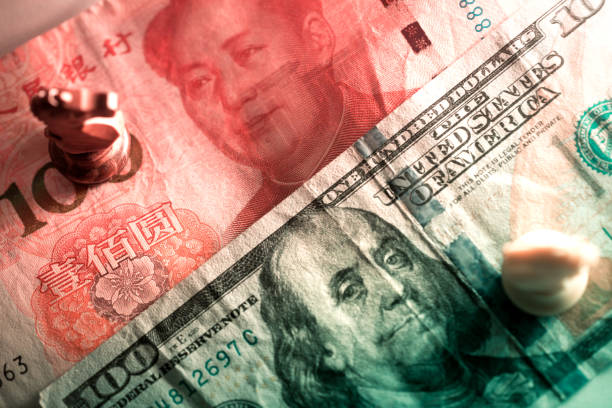
Officially, the Chinese government stated its desire to make the Renminbi a competitor to the dollar. Beijing could finance trade, expand its influence on global markets and improve the payment system if the Renminbi played a more significant role internationally. It would protect the country against U.S. moves, like the recent sanctions imposed in response to the treatment of the Uighur minorities and Hong Kong’s control.
Maggiori states, “We are at the beginning.” “China has many important features that would make it a possible reserve currency issuer. Yet it may never reach this level.”
Starting Slowly
Beijing’s market policy has deliberately and methodically made it open to foreign capital in the last decade. Foreign investment in China’s bond market increased from $100 billion between 2014 and 2022 to more than $600 billion.
Rather than opening up the floodgates to all investors, China has allowed different types of investment at different stages. China initially wooed investors representing large official creditors, such as central banks. Over time, China’s policies became more tolerant of smaller and less stable private investors.
QuoteWe’re just at the beginning. China has many crucial features make it a potential reserve currency issuer, yet it might never get there.AttributionMatteo Maggiori
Maggiori explains that “early programs required investors to become official creditors or to hold long-term investments and negotiate bilaterally to gain access.” The latest Bond Connect program has no lock-up provisions – the investment horizon can be as short as a single day – and approval is much easier. This deliberate policy choice has led to the staggered entry of foreign investors.
Maggiori observes that this process appears backward. When a country starts to internationalize its bond market, the riskier (and risk-tolerance) private investors are usually first in. Only after the market has proved itself reliable do conservative investors join. He says, “We don’t believe emerging countries have the potential to attract large, stable investors at first.”
This raises the question: Do investors consider China similar to an emerging market, like Brazil, or a fully developed market, like Japan? Investors tend to include Chinese domestic bonds in their emerging and developed debt portfolios.
Maggiori wonders about the next step in China’s internationalization strategy. Will China’s market reforms continue to keep it on a path toward becoming a haven for debt? Or will they stall out or reverse when faced with a capital exodus, causing investors to label China as a risky frontier or emerging market?
The Currency of Reputation
China’s reputation is critical. Investors are interested in knowing if the country will remain open, allowing them to withdraw their money freely during times of financial or political crisis. This would build international confidence in the Renminbi. Or will they “lock the doors,” as Maggiori says, undermining the market’s credibility?
Maggiori and his coauthors have shown that China’s initial decision to open its bond markets to large, more stable investors in times of crisis helped boost the country’s reputation. This, in turn, enabled the government to borrow more money from private investors as the market continued to thaw.
China’s current financial situation — the economy started hemorrhaging bond investments in early 2022 — offers a test of whether or not it is willing to bear the immediate costs associated with disinvestment for its long-term objectives. “Right away, the market tests China,” Maggiori explains. I’m curious to see what happens in this situation. China’s bond markets have remained open so far.
Maggiori will be watching the market reforms in China over the long term. If they tend toward openness, it will be a positive signal that China is committed to becoming a reliable, safe store of value. Maggiori says that more foreign holdings will allow China to let its domestic savers invest abroad without impacting net borrowing. Chinese residents are eager to send some money abroad. This capital could be replaced if foreigners were allowed to invest in Chinese bonds.
It is challenging to gain enough credibility as a reserve currency. Over the past 50 years, many coins have been considered contenders – notably the Japanese currency and the Euro -but none have managed to overthrow the dollar. Maggiori says that “our model shows the country’s path to becoming a reserve currency does not follow a straight line, and in most cases, the countries don’t have enough reputation” to reach this goal.
China faces another challenge in that other countries may inadvertently or deliberately interfere to make its rise more difficult. For example, the U.S. could flood the market, luring investors away from the Renminbi with safe assets. Maggiori says that competition makes investing less profitable and less attractive in building up your currency as a reserve currency.